Women, Teens Helped Build Terra-Cotta Army, Chinese Study Says
A new study has found that women and adolescents, not only men, helped build China’s 2,000-year-old Terra-cotta Army.
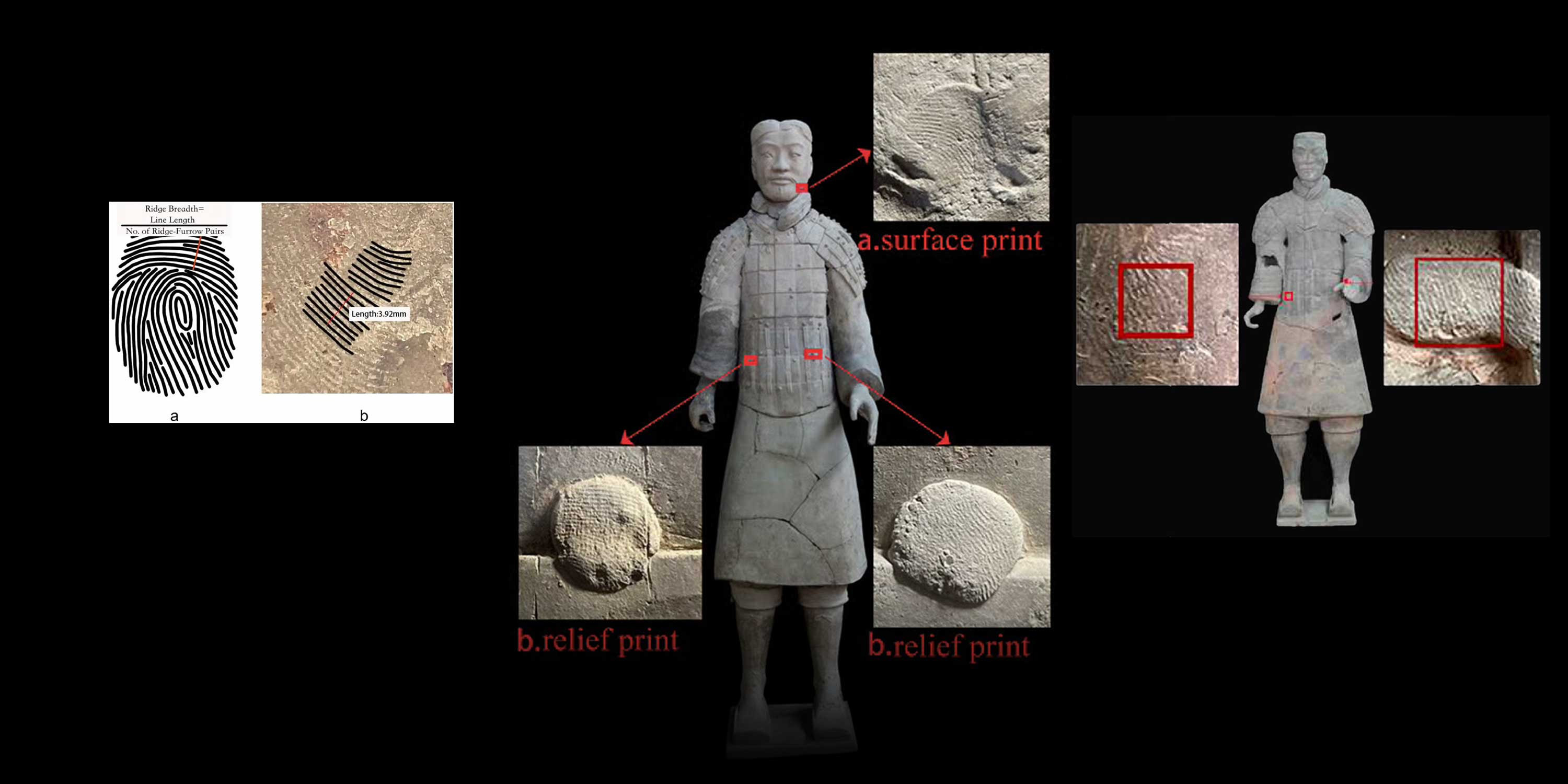
The study used fingerprints found on a portion of the 8,000 statues of soldiers and horses in the tomb of China’s first emperor, Qin Shi Huang, to assess their makers’ ages and sexes for the first time, domestic media reported this week. The research was conducted by the Emperor Qinshihuang’s Mausoleum Site Museum in Xi’an, capital of the northwestern Shaanxi province, and Shandong University’s School of Archaeology, in the eastern city of Jinan, and will be published in Volume 82 of the Journal of Cultural Heritage at the end of the year.
Past studies of labor forces during the Qin dynasty (221–206 BC) relied primarily on legal texts and largely treated men as the default workers, with 15 reportedly the minimum age for service. Prior research has also neglected to examine the genders and ages of the workers behind the Terra-cotta Army.
Previous analysis of the identities behind ancient fingerprints has also failed to account for factors such as similarities in fingerprint size and ridge distribution between women and teenage boys, differences between ancient and modern fingerprint size, and clay shrinkage after firing, the researchers said.
In contrast, the new study used a Bayesian mixture model to account for these factors and estimate fingerprint-related parameters at both the individual and population levels through probabilities. The model assigned the fingerprints possible ages and sexes, analyzed their mean ridge breadth (MRB) or thickness, and compared these to growth curve-projected values.
The team analyzed 79 well-preserved fingerprints from 36 figures in Pit 1 of the Qinshihuang mausoleum. The results showed that 45% belonged to males, 32.7% to females, and 22.3% to juveniles under 15.
The research provided quantitative biological evidence challenging previous assumptions that large-scale craft production in the Qin dynasty relied only on adult male labor. It also offers a better understanding of the Qin dynasty’s labor systems and institutionalization of apprenticeships.
While textual records and artifact-based inscriptions had previously challenged the theory that the project relied exclusively on male labor, the team’s findings offer a new framework for quantitatively studying ancient craft production and the ages and sexes of the laborers involved.
“This biological evidence highly corroborates numerous historical records, vividly reconstructing the production scene in the Qin dynasty’s state-run workshops where men and women served together, and adult artisans worked alongside juveniles, who may have been helpers or apprentices,” the study’s authors wrote.
However, they also identified several limitations of the study. For one, the percentages attributed to adult and juvenile, and male and female fingerprints may not equal the percentages of actual workers with those traits, they said, as multiple fingerprints may have come from the same person.
They also wrote that more experienced workers may have left fewer fingerprints, which may have increased the proportion of juvenile prints, while the reference database was both based on modern Czech-Caucasian fingerprints, not East-Asian prints, and contained more female samples, potentially skewing the results.
Editor: Marianne Gunnarsson.
(Header image: Types of fingerprints on the terra-cotta figures. From Journal of Cultural Heritage and Xinhua)